
Quick answer
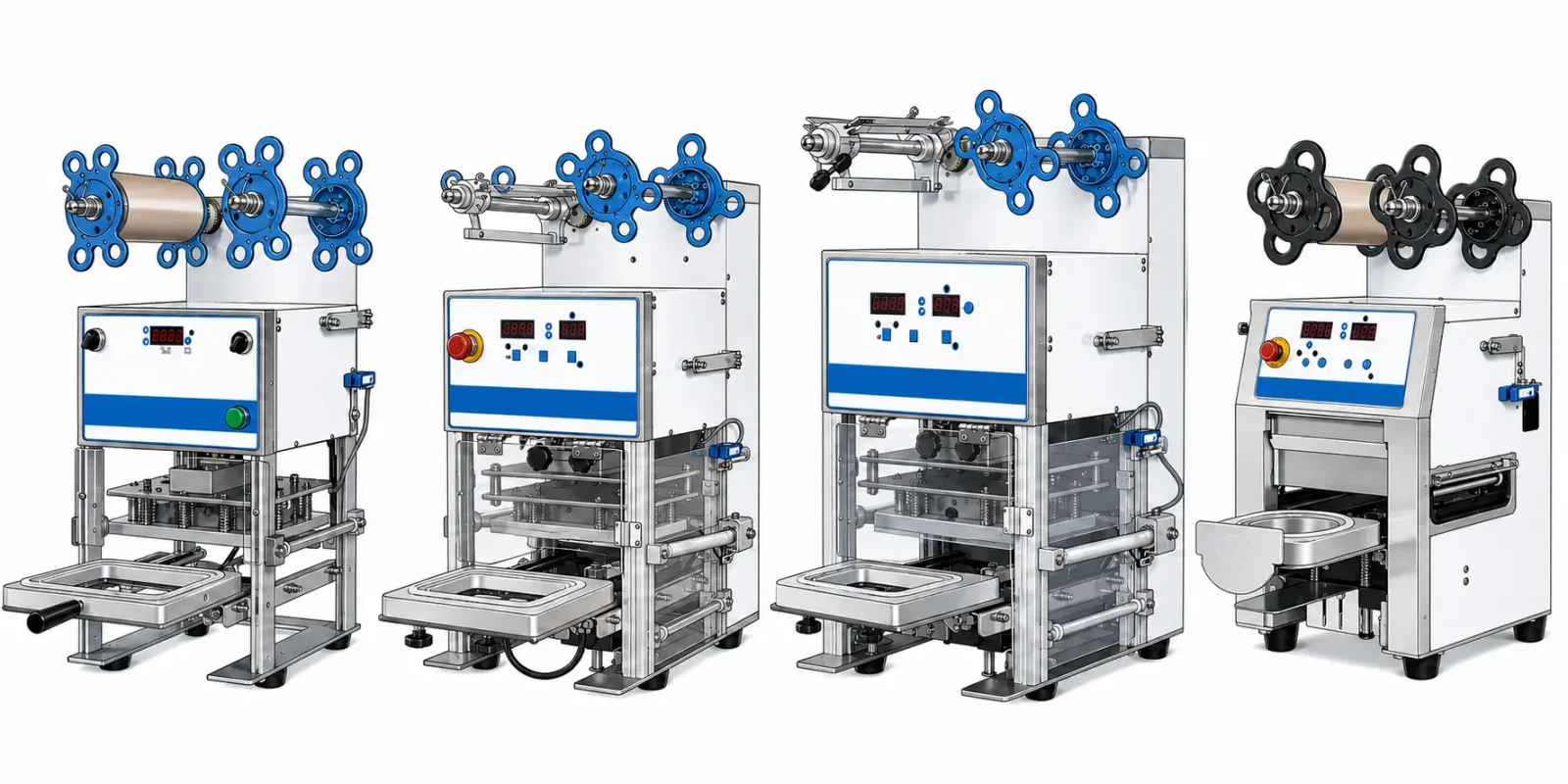
Phoenixes provides four sealing equipment options for trays and bowls. PH-39M is a manual tray sealer for small batches; the PH-59L is motor-driven and needs no compressor; the PH-900 series is air-compressor-driven for higher output; and the PH-58M is a bowl sealer for round containers.
Capacity depends on the operator and model, and MAP shelf life must be tested. Once you provide your container details, Phoenixes can help confirm the suitable equipment and quotation.
Four machines, in plain language
Phoenixes provides four sealing equipment options for trays and bowls, each suited to different operating conditions. The following sections explain the main features of each model in a straightforward way for comparison.
The four models
| Model | Main difference | A practical starting point for |
|---|---|---|
| PH-39M | Manual tray sealer. The operator manually moves the container and lower mold in and out, while the machine controls the sealing cycle. Approximately 300 seals per hour, depending on the operator. | Small batches, trials, and businesses using a tray sealer for the first time. |
| PH-59L | Tabletop and motor-driven; no external air compressor is needed. Verified models run at approximately 300–800 trays per hour. | Restaurants, takeaway shops, and smaller central kitchens. |
| PH-900 series | Air-compressor-driven and requires an external compressor. Available in several sizes and mold configurations, with approximately 360–1,350 seals per hour depending on the model and number of molds. | Higher output, multiple molds, or larger containers. |
| PH-58M | Bowl sealer for 120–140 mm round cups, bowls and tubs. | Soup bowls, tofu pudding, shaved ice, and similar round containers. |
PH-39M — manual tray sealer
Manual tray sealer refers to the way the container enters and leaves the mold. The operator manually moves the container and lower mold in and out, while the machine itself controls the sealing cycle.
At roughly 300 seals an hour, depending on the operator, it suits small batches, trials, and a business sealing trays for the first time.
PH-59L — motor-driven, no compressor
The PH-59L is tabletop and motor-driven, and the key practical point is that it does not need an external air compressor. That makes it straightforward to run in a restaurant, a takeaway shop or a smaller central kitchen without adding compressed-air infrastructure.
Verified models run at approximately 300–800 trays per hour.
PH-59L — motor-driven
No external compressor. A practical tray sealer for restaurants, takeaway and smaller central kitchens. See the specification.
View PH-59LPH-900 series — air-compressor-driven
The PH-900 series is air-compressor-driven, which means an external compressor is required. It is available in several sizes and mold configurations, running at approximately 360–1,350 seals per hour, depending on the model and the number of molds.
It suits higher output, multiple molds, or larger containers. Before specifying it, confirm you can supply the compressed air it needs — that is the practical requirement that decides whether this series fits your site.
PH-58M — bowl sealer
For round containers, the PH-58M is the bowl sealer to evaluate first. It handles 120–140 mm round cups, bowls and tubs — soup bowls, tofu pudding, shaved ice and similar.
Whether another machine can seal a particular round container still depends on the container and the mold, so the PH-58M is the first model to assess for bowls, not the only possible answer. Send the container details and it can be evaluated.
If you need MAP
Modified Atmosphere Packaging can extend shelf life, but the result is not a fixed number. It depends on the food, the gas, the film, the seal, hygiene, and cold-chain conditions — and it has to be tested for your product. Phoenixes will not promise a shelf-life figure that has not been verified for what you are packing.
If MAP is a requirement, please mention it when making your inquiry. Phoenixes can then evaluate the suitable equipment configuration based on the product and site conditions.
What to have ready before a quotation
To match a machine and mold to your product, Phoenixes needs:
- Container length, width, height and rim shape
- Container material and contents
- Required hourly output
- Whether an air compressor is available on site
- Whether you need MAP
- Physical samples of the container
Actual pricing is evaluated according to the model, mold, configuration and site conditions. Once you provide the information above, Phoenixes can prepare a formal quotation.
Send your container, get the right machine
Container dimensions, material, output, compressor availability, MAP requirement and a sample. Phoenixes will match a machine and mold and quote it.
Request a quote